
Why I Stopped Trying to Fit the Pilates Mould (And You Should Too)
What is the Body Story™️ Method™?
The Body Story Method™ is a neurosomatic healing framework designed for practitioners and individuals to resolve chronic pain loops. By decoding the unconscious story held within the kinetic chain—often starting with the feet—this approach transforms physical and emotional pain from a "problem" into somatic wisdom for lasting recovery.
I almost didn't submit the article to Pilates Expo Magazine.
Not because the Body Story Method™ wasn't working - its success is visible in every client who has achieved body-based emotional release - but because I was terrified I wasn't "Pilates enough."
I feared that using kinetic chain mapping to treat a neck injury by starting at the feet would be seen as strange. I worried that integrating neurosomatic healing and trauma-informed movement made me an outsider. I spent years as the "black sheep," but I’ve realized that the "mould" is exactly what prevents true somato-emotional processing (aka Body Stories).
How does the traditional Pilates mould limit healing?
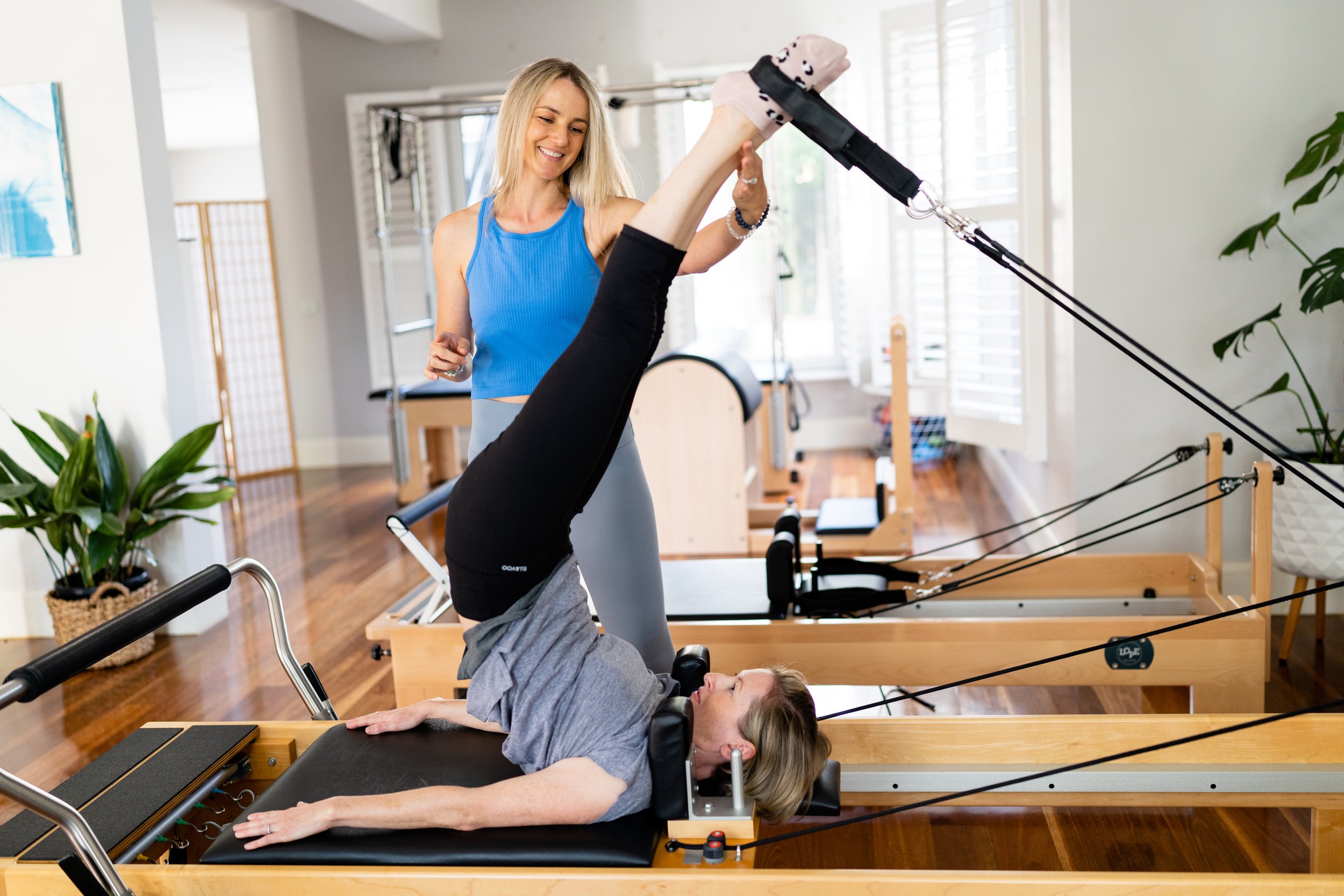
In my early career, I followed the "by-the-book" approach. However, I noticed a frustrating trend that many Pilates instructors and yoga teachers face:
Managing vs. Resolving: Clients were merely coping with symptoms rather than getting out of thechronic pain cycle.
Stagnant Patterns: Traditional modifications kept clients "safe" but trapped them in the same unconscious compensation loops.
The "Local" Trap: Practitioners focused only on the site of pain rather than the whole-body-mind approach.
Why should you start with the feet for neck and shoulder pain?
The breakthrough happened with a client suffering from a protruding disc in her neck. While others went straight to the injury, I looked at her unconscious body language.
The Feet-to-Cranium Connection: Misalignment in the foundation creates fascial restrictions that travel up the entire kinetic chain.
Decoding the Story: By treating the feet, we addressed the root of her somatic story, restoring her confidence in just a few sessions.
Somatic Literacy: The body holds "stories" in the feet, hands, and head tilt that the conscious mind often misses.

What is the difference between Mind-Body and the Body Story Method™?
While many methods claim to be "holistic," the Body Story Method™ provides a deeper advanced practitioner certification by integrating:
Unconscious Awareness: Reading the body's posture to find the "hidden" emotional narrative.
Energy and Emotion: Acknowledging that the body trains the mind through neurosomatic pathways, not just the other way around.
Curiosity over Fear: Shifting the practitioner's perspective from "fixing a problem" to "exploring pain as wisdom."
How can movement professionals become more confident?
If you’re a bodyworker, physio, or mindset coach frustrated by "looping" client issues, it is a sign your toolkit needs to expand into somatic literacy. To bridge the gap between technical skill and deep healing, you need to:
Trust the 5 Body Stories: Learn to read the feet, hands, head tilt, and arms as a map of the internal state.
Hold Neuro-Somatic Safe Space: Using intentional language that allows the client’s nervous system to regulate.
Embrace Innovation: The industry doesn't need more "standard" teaching; it needs trauma-aware tools that actually shift the needle.
The Real-World Impact of Somatic Wisdom
The industry doesn’t need more instructors teaching exactly the same way; it needs professionals brave enough to decode the human experience through neurosomatic healing.
Statistics & Evidence:
The Chronic Pain Reality: Research indicates that approximately 20% of the global population lives with chronic pain. Studies in somatic psychology show that when movement is combined with trauma-informed awareness, recovery rates for "non-specific" back and neck pain improve significantly compared to physical exercise alone.
The Practitioner Shift: Practitioners who move from "exercise instruction" to somato-emotional facilitation report higher client retention and faster breakthroughs in physical mobility.
The Body Story Method™ is a shift in belief. It is the realization that the body knows what to do, pain is a message, and curiosity is the key to transformation.
Whatever it is, the way you tell your story online can make all the difference.
Frequently Asked Questions
What is a neurosomatic approach to chronic pain?
A neurosomatic approach, like the Body Story Method™, treats pain by addressing the communication between the nervous system (neuro) and the physical body (somatic). Instead of just stretching a tight muscle, we decode the unconscious story or stress response held in the nervous system that is keeping that muscle tight. This "whole-body-mind" perspective is essential for resolving chronic pain loops that traditional exercise alone cannot fix.
How can I help clients in pain more confidently as a practitioner?
Confidence comes from having trauma-aware tools that go beyond basic anatomy. To work more effectively, practitioners should:
Learn to read unconscious body language (like head tilts or foot positioning) to see what the client isn't saying.
Shift from "fixing" the injury to facilitating somato-emotional processing.
Understand kinetic chain mapping to find the root cause of pain, which is often far from the site of the symptom.
Why is "working holistically" better for long-term injury recovery?
Working holistically means acknowledging that the body, mind, and energy are interconnected. Traditional methods often fail because they treat the body like a machine with isolated parts. A holistic approach recognizes that a neck injury may be maintained by a lack of grounding in the feet or an unresolved emotional stress response. By treating the kinetic chain and the nervous system simultaneously, you create lasting change rather than temporary relief.
What are the "5 Body Stories" in the Body Story™️ Method?
The 5 Body Stories are how someone shows up in different contexts and how they relate to people around them. You can read Body Stories in the feet, hands, head tilt, pelvis, and breath - where the body stores its most "honest" unconscious data. By learning to "read" these areas in under 60 seconds, practitioners can identify a client’s internal state and emotional blocks before the session even begins. This level of somatic literacy allows for a truly personalized healing experience.
Can movement (like Pilates or Yoga) alone heal trauma?
While movement is a powerful tool, traditional fitness often stays in "doing" mode, which can sometimes bypass the trauma stored in the tissues. To truly heal, movement must be paired with neurosomatic awareness. The Body Story™️ Method teaches you how to use movement to "retrain the mind" by creating a safe, curious space for the body to release stored tension and rewrite its physical narrative.
Want to read the full article I wrote for Pilates Expo Magazine?
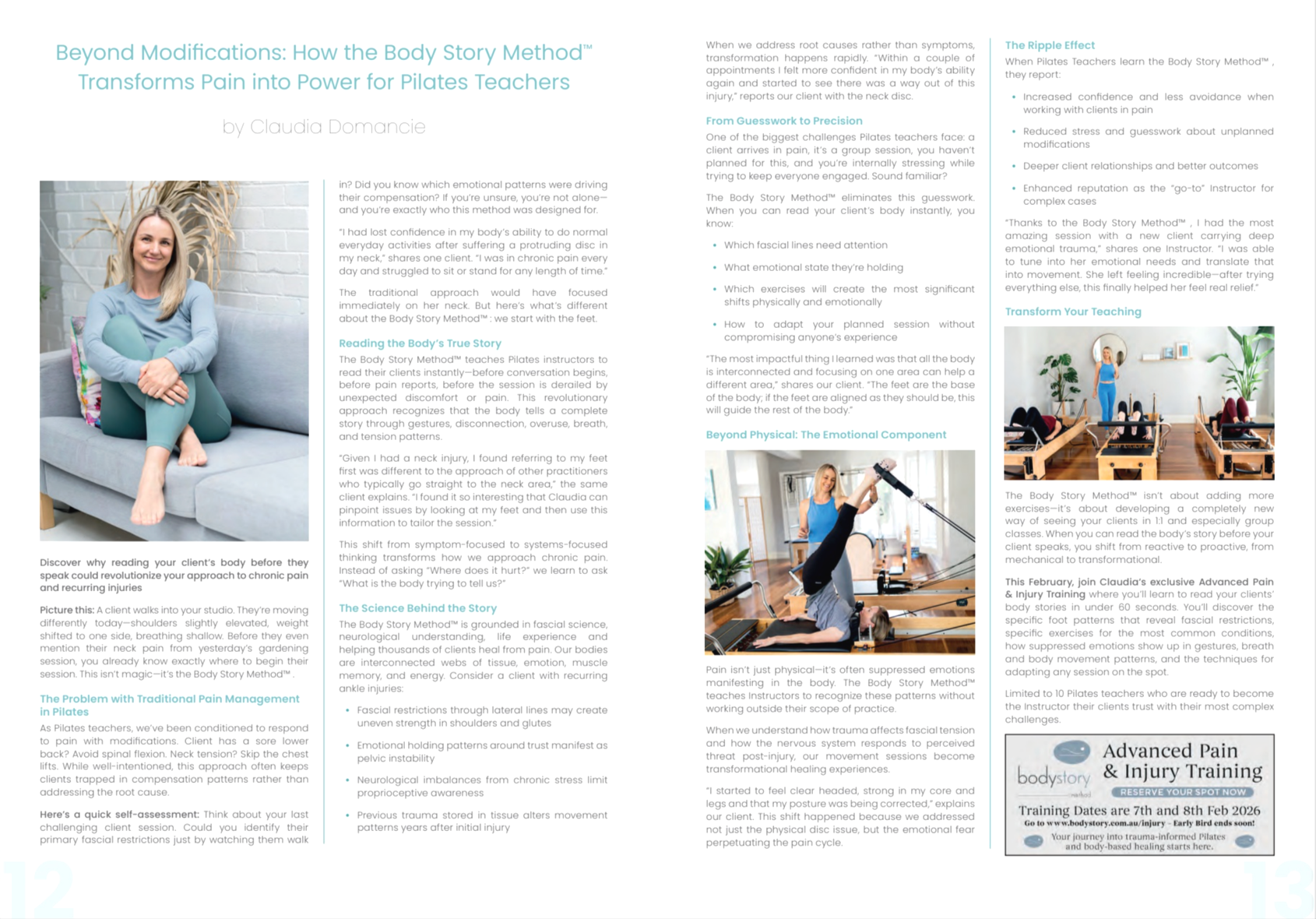
It’s called Beyond Modifications: How the Body Story Method™ Transforms Pain into Power. Click here to read
Get Certified in the Body Story™️ Method: Join me for the Body Story Practitioner Certification. Learn to read your client’s unconscious body language in under 60 seconds and gain the trauma-aware tools to work at the level you know is possible. Learn more and get certified